


Command Hospital (SC)
The present Commandant of Command Hospital (SC) is Maj Gen B Nambiar, AVSM, SM, VSM.
The hospital was established in 1869. It was one of three military hospitals established at and around Poona in the same year. It was initially the British Military Hospital, Wanowrie. It was built to cater to the British troops of the garrison as part of the station hospital system. The two other hospitals established nearby were at Dinkirk Llines (now Kirkee) and Ghorpadi Lines.
All three 100 bedded hospitals were used for convalescence of British troops, injured in the two world wars. The salubrious climate of Poona did much to hasten recovery. The location of Military Hospital, Wanowrie is presently occupied by the upper wing and main office building of Command Hospital (Southern Command). The lower wing of the Command Hospital presently occupies six large buildings that were referred to as the “Connaught Barracks” and originally housed troops of the Poona garrison. The Malignant Diseases Treatment Centre occupies the first building specially constructed as a ward for Military Hospital, Wanowrie in 1869.
On 01 Dec 1947, the three hospitals were amalgamated into a single hospital. The new hospital was designated Military Hospital, Poona on 01 Jan 1948. The hospital was re-designated as Command Hospital (Southern Command) on 08 April 1967. It is spread over 105 acres of land. Command Hospital(Southern Command) is the largest hospital of the Indian Army. The hospital acquitted itself with great distinction during OP Pawan in Srilanka by treating 868 casualties. It has also provided medical aid during natural calamities such as the earthquakes at Bhuj and Latur, floods at Sangli and the Tsunami in Southern India.
The following description attempt to highlight certain faculties that make Command Hospital (Southern Command) a mega-tertiary care hospital in quest of perfection.

-
Department of Neurosurgery
It was established in January 1963. Facilities include micro-neurosurgery and radio frequency ablation. The first national facility for stem cell therapy in cases of spinal cord injury has been started. The department has performed “Awake Craniotomy” for seizure with intracranial mass lesion, insertion of a device for inter-vertebral assisted motion for chronic low backache, cervical disc replacement and artificial lumbar disc implantation.
01 -
Department of Urology
It was established in 1976. Apart from a Urodynamics laboratory and Dornier ESWL machine there is a Urology operation theatre. Renal transplantation was started in Mar 2007 and 5 transplants have been carried out during 2007. It also provides facilities such as Urolaparoscopy, ESWL, Endourology, Reconstructive Urology, Andrology & Urogynaecology, Uro-Oncology, Neurourology, Paediatric Urology and management of Spinal Cord Injury patients.
02 -
Malignant Diseases Treatment Centre(MDTC)
It was established on 23 July 1973. It provides comprehensive multi-modality cancer care with departments of Medical Oncology, Surgical Oncology and Radiation Oncology. Facilities include laser surgery, altered fraction radiotherapy, concomitant chemo-radiotherapy, brachytherapy and autologous stem cell transplants. Recent improvements include a fibreoptic laryngoscopy facility, Cavitron Ultrasonic aspirator, Argon beam Laser and Aphresis machine. The centre specializes in organ / function preservation & restoration surgery.
03 -
Department of Plastic Surgery
It was established in 1955 and was one of the first of its kind in India. It is a recognized centre for management of Brachial Plexus Injuries. The facilities include day care surgery (Aesthetic Surgery), Cleft counseling centre, Craniofacial unit, Hand surgery unit, Burns unit and Micirosurgical unit for microvascular free flaps, microneural and replant surgery.
04 -
Department of Nuclear Medicine
It was established in Dec 2002. It has Dual head SPECT Gamma Camera and PC Based Thyroid uptake system. It is recognized by Atomic Energy Regulatory Board. It carries out Myocardial Perfusion Studies, Whole Body Bone Scan, Radioactive uptake Studies, DTPA – GF Rate, GHA/TMSA Cortical Scan, Lung Perfusion Scan, Liver/Hepato-Biliary Scans, ECD Brain Scan and GI Bleed Scans.
05
Contact us
Army Institute of Cardio-Thoracic Sciences (AICTS)
The present Commandant of AICTS is Maj Gen PK Sharma. The hospital was established in 1945 as Indo British General Hospital at Aundh in Pune . It was raised after the Second World War, as a hospital for Pulmonary Tuberculosis and Chest Diseases. It was designated as Military Hospital Aundh in Mar 1946. Initially it was a 540-bedded hospital. In 1967 an additional 60 beds were added for Cardio-Thoracic Surgery, making it a 600 bedded hospital. Construction of the multistoried hospital building was started in the mid-sixties and completed in 1971. The hospital shifted to its present location in Sep 1971 and was later re-designated as Military Hospital (Cardio-Thoracic Centre). It has emerged as a leading tertiary care super-speciality centre. The hospital is committed to provide comprehensive holistic patients care for cases of pulmonary tuberculosis, cardiac and respiratory diseases.

MH(CTC) has made its place in history by establishing the following landmarks.
1945
FIRST LUNG RESECTION IN THE SUBCONTINENT
1972
FIRST ASD REPAIR
1989
FIRST CORONAR ARTERY BYPASS SURGERY
1996
TOTAL CONGENITAL HEART SURGERY UNDER CIRCULATORY ARREST
1999
FIRST THORACOSCOPY & VIDEO ASSISTED BRONCHOSCOPYY
1999
FIRST BEATING HEART CORONARY ARTERY SURGERY
2001
FIRST XENOGRAFTIMPLANT
2002
FIRST ELECTROPHYSIOLOGY AND RADIOFREQUENCY ABLATION
2003
AUTOMATIC IMPLANTABLE CARDIOVERTER DEFIBRILATOR IMPLANTATION
2003
AUTOMATIC IMPLANTABLE CARDIOVERTER DEFIBRILATOR IMPLANTATION
2003
AUTOMATIC IMPLANTABLE CARDIOVERTER DEFIBRILATOR IMPLANTATION
2003
AUTOMATIC IMPLANTABLE CARDIOVERTER DEFIBRILATOR IMPLANTATION
2003
ASD & VSD DEVICE CLOSURE
2005
FIRST CORONARY ARTERY BYPASS REDO SURGERY
2005
3542 CATH PROCEDURES , 542 CARDIAC SURGERIES & 66 COMPLEX CONGENITAL HEART REPAIRS
2006
FIRST CO2 ANGIOGRAPHY, FIRST ROSS PROCEDURE
2006
FIRST PDA STENTING IN ARMED FORCES
2007
FIRST STEM CELL THERAPY IN CORONARY HEART DISEASE
2007
FIRST DUAL DEVICE CLOSURE IN TWIN ATRIAL SEPTAL DEFECTS
2007
FIRST BRONCHIAL STENTING FOR BRONCHIAL STENOSIS, FIRST FLAP
2007
VALVE CLOSURE OF VSD AND FIRST PDA DEVICE
2007
CLOSURE OF BP FISTULA IN WORLD LITERATURE
The hospital has five clinical departments, which are its pillars of strength.
-
Department of Cardiology
It has a non invasive cardiac lab with facilities such as echo cardiography, treadmill test or stress test, tilt table test and colour Doppler. In invasive techniques, there is a high resolution cardiac catheterization laboratory which was commissioned in 2001. It is used for angiography, cardiac catheterization, angioplasty, congenital defect closure, repair of diseased heart valves, electro physiological studies and procedures like angiography, angioplasty, rotational atheratomy, renal angioplasty, carotid artery angioplasty and pace maker implantation. Radio frequency ablation for arrhythmia is also undertaken.
01 -
Department of Cardio Thoracic Surgery
It has performed over 7000 open heart operations and presently every year 700 cardiac surgeries are being performed. Ever since the first lung resection was performed by Lt Col Leigh Collis in 1945, the department has always kept pace with latest strides made in this field the world over. 50% of heart surgeries are CABG. It is one of few centres in the country where complex congenital corrective surgery is being under taken in very small children. At present over 200 paediatric cardiac surgeries are performed annually.
02 -
Department of Respiratory Medicine
It has a 350 bedded unit for the treatment of tuberculosis and various non tuberculosis diseases. The department has a respiratory Intensive Care Unit which is equipped with invasive and non invasive ventilator, defibrillator and infusion pumps. It has various invasive investigation methodologies such as bronchoscopy and thoracoscopy. Endo bronchial laser ablation and repair of bronco pleural fistula are also being carried out.
03 -
Department of Radiology
It caters to manifold diagnostic services like radiography, sonography, and colour doppler studies. The department also carries out interventional procedures in vascular and non vascular areas of the body and provides definitive as well as symptomatic relief for various disease conditions. Specific interventions including bronchial artery emobilization, stroke thrombolysis, carotid artery stenting and stent grafting of aneurysm are performed routinely.
04 -
Department of Lab Medicine
It is the only service lab accredited by RNTCP. It has state of art Mycobacteriology lab with molecular testing facilities viz CBNAAT for Mycobacterium tuberculosis and COVID19. It caters for all tests related to COVID19 patient management. It has hematology, cytology, histopathology and clinical pathology facilities. It also caters for Fine needle Aspiration cytology (guided and direct). Provides Rapid Onsite evaluation (ROSE) support to invasive procedures such as EBUS guided aspiration for cytology. It also has a fully automated coagulometer for coagulation studies required in cardiac surgeries. It has a recently added negative pressure chamber for improving biosafety of the lab.
05 -
Training
Apart from being the hub of health care the hospital is also a training center for post doctoral degrees in cardiology, cardio thoracic surgery and respiratory medicine. Medical research is also an integral part of hospital activities.
06
Contact us
Military Hospital (Kirkee)
The present Commandant of MH Kirkee is Brig Jyoti Joshi.
The hospital was initially established as 7 Indo British General Hospital (7 IBGH) for convalescence of casualties of Second World War. It was renamed Military Hospital Kirkee on 29 Mar 1949. Lt Col RC Dracup was posted as Commanding Officer on 20 Apr 1949. The Hospital moved to its present location at Range Hills on 08 Aug 1949, with a complement of 400 beds. This location was previously occupied by 32 Defense Battalion. On 12 Jul 1979, the accommodation of AFMRU and 203 BD Platoon & Pioneer Company was also taken over to accommodation TB patients and OPD. The bed strength of the hospital kept fluctuating over the years, reaching the lowest of 100 beds during 1953-1956 and the highest of 1097 beds on 31 Oct 1971 during the Indo-Pak conflict. At present it has 846 beds with an additional 100 crisis expansion beds.
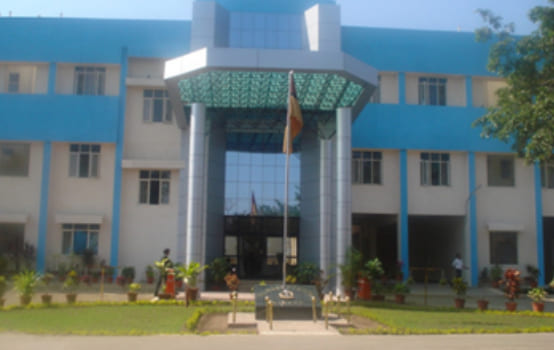
The emergence of Military Hospital Kirkee as a centre of excellence can be traced through the years by a series of landmarks.
08 Aug 1949
400 bedded MH Kirkee started functioning from its present location at Range Hills.
11 Aug 1958
105 bedded Orthopaedic Centre was established at this hospital with Maj DD Verma as the Officer-in-Charge
13 May 1968
30 bedded Spinal Cord Injury Centre was established at the hospital
13 Aug 1968
The hospital becomes a multi disciplinary health care institution by addition of 45 Skin and STD beds and 25 Psychiatry beds
27 Aug 1981
The first total Hip Replacement in the history of Armed Forces Medical Services was carried out here by Col DJ Mukherjee, AVSM, VSM
05 Jul 1993
The first Total Elbow Replacement in the history of Armed Forces Medical Services was successfully performed by Col SK Biswas
22 Feb 1995
DPR board for new KLP was held at MH Kirkee with Brig AVV Rao, Commandant as Presiding Officer
21 Sep 1997
First ever conference on Military Psychiatry in the country was held at the hospital
31 Jan 2005
Foundation stone for the Service Block of Essential Technical Accommodation of new KLP was laid by Lt Gen JR Bharadwaj, PVSM, AVSM, VSM, PHS, DGAFMS & Sr Col Comdt.
-
Battle Casualties
The hospital has acquitted itself creditably by treating battle casualties of major operations. It treated 74 casualties of the Sino-Indian conflict (1962), 458 casualties of the Indo – Pak War (1965), 825 (including 152 Bangladeshis) of the Indo-Pak War (1971), 430 casualties of OP Pawan (1987-1990) and 20 casualties of OP Vijay (1999).
01 -
Aid to Civil Authorities
The hospital has provided sterling medical support during major relief operations. During the Bombay riots, the hospital set up a medical camp at Deonar and treated 2700 victims from 14 – 19 Dec 1992. As part of OP Sahayata, 84 victims of the Bhuj earthquake were evacuated by air to this hospital for treatment. During OP Megh, four medical teams were sent for flood relief in Maharashtra during Jun – Jul 2005 and about 25000 civilians were provided medical aid. Four medical teams were also sent to various locations in Maharashtra for flood relief in 2006.
02 -
What sets the hospital apart !
Third largest hospital of Armed Forces – MH Kirkee with authorized 881 beds (excluding 100 crisis expansion beds) is the third largest hospital of Armed Forces after CH(SC) and Base Hospital, Delhi Cantt.
Largest Orthopaedic Centre – The 175 bedded Orthopaedic centre is the largest of its kind in the Armed Forces.
Largest Spinal Cord Injury Centre in South East Asia – The 80 bedded Spinal Cord Injury centre is the largest of its kind in South East Asia. A total of 3111 Spinal Cord Injury patients have been treated here over the years since 1968.
Presently, 52 patients are undergoing treatment at the centre.
03 -
Part of Unique Rehabilitation Complex
This hospital along with the Paraplegic Rehabilitation Centre and Queen Mary Technical Institute forms a unique rehabilitation complex for Spinal Cord Injury patients of our country in general and Armed Forces in particular.
04 -
Pioneer in Joint Replacement
This hospital pioneered joint replacement Surgery and Arthroscopy in the Armed Forces. State of the art joint replacement surgery is undertaken here. A record 80 Joint Replacements were carried out in the year 2007.
05
Contact us
Artificial Limb Centre
The present Commandant of Artificial Limb Centre Pune is Brig CN Satish.
Artificial Limb Centre (ALC) Pune, a premier Tri Services Institution of the Armed Forces Medical Services, was established in Pune on 19 May 1944 to provide best possible prosthetic solutions and comprehensive rehabilitation to the amputee soldiers of the British India with the backdrop of World War-II. During this period, ALC was in the forefront of rehabilitation of a large number of wounded Indian Soldiers, who had fought for the Allied Forces in various parts of the world.
Later in 1945, the establishment was shifted to Kirkee and then to Lahore in Dec 1946. However, after the partition of the country in Aug 1947, the Centre was re-established in Pune, at its present location on 01 Jan 1948 with the remaining skeleton staff. The establishment is under overall administrative control of the DGAFMS. Since then, ALC has excelled in the field of prosthetics & orthotics, armed with a humane & patient centric outlook, set by all worthy teams with their great foresight and unwavering commitment.
Although ALC was raised with the primary objective of meeting the prosthetic and orthotic requirements of disabled personnel of the armed forces, from 1951 the facilities were gradually extended to civilians as well. In 1958, a 70 bedded civilian wing was added to this Centre. A 120 bedded ward was already authorized for Defence Services personnel and ex-servicemen. In 1964, Artificial Limb Sub-Centres (ALSC) were established at Base Hospital Delhi and Base Hospital Lucknow to provide repair facilities. Additional Sub-Centres have since been established at Command Hospital Chandimandir, Base Hospital Guwahati and Command Hospital Air Force Bangalore.
The Artificial Limb Centre has received ISO 9001 : 2015 certification.The motto of the Centre is “No Wheelchair No Crutches”.

-
Special Features of ALC
State of the art limb manufacturing facilities.
Modern CAD-CAM system for precision engineering & manufacturing of socket.
Workshop for manufacture of Prosthesis, Orthosis and mobility aids.
-
Endo-skeletal Carbon Fibre Prostheses.
-
Modern Above Knee Prostheses.
-
Advanced Upper Limb Prostheses.
-
Advanced Sports Prostheses for para sports personnel.
Comprehensive rehabilitation of patients with locomotor disabilities
Unique Prosthetic Management of Limb Injuries
Museum with over 500 artificial limbs of historical value.
01 -
-
Clientele
Entitled: Service personnel and their dependents, Ex service personnel and their dependent ECHS beneficiaries; Cadets & Recruits.
Non-entitled: Para Military Forces – BSF, CRPF, CISF, Assam Riffles, SSB, ITBP, NSG Indian Coast Guard, Territorial Army, Police Forces, Civilians, CGHS Beneficiaries.
Soldiers of friendly nations sponsored by respective governments are also fitted with advanced prostheses as per their requirements.
Note: Non-entitled cases are provided with required prostheses / orthoses on payment basis as per Govt approved rates. They are admitted at the Convalescence wing of the Centre as on requirement basis. Rate for non-entitled cases as approved in Hospital Stoppage Roll for this Centre is Rs 200/- per day including meal (Para 66 of Appx V, RMSAF). Other charges for treatment purpose as applicable.
02 -
Patient’s Participation
Almost 71,000 persons with disabilities are registered at ALC. Approximately 800 new beneficiaries are added every year. Patients are the best source of feedback. Their suggestions are noted and products are improved to provide better satisfaction.
03 -
Facilitiesx
The Centre is self sufficient in all respects. Materials used for manufacture of limbs are mostly indigenous. Many components are manufactured locally at this Centre. ALC also provides technical knowhow and material to other limb centres. The Centre has also been participating in exhibitions to educate experts, doctors and patients about the facilities available here.
04 -
Quest for Perfection
Concerted efforts are made to conduct research work and improve the quality of artificial limbs and appliances. There is a special emphasis on use of newer material and technology. Efforts are made to keep pace with similar advanced centres all over the world.
05 -
Keeping Pace with Times
Artificial Limb Centre has to adapt to changing needs of patients to uphold its long tradition of providing the best chance for rehabilitation. Changes have been made in basic raw material as well as technology in manufacture of prosthesis. Wood which formed the basic material for manufacture of Limbs has given way to plastic lamination using epoxy resins and polypropylene.
06 -
Rehabilitation
The Artificial Limb Centre which began with the aim of providing limbs gradually started focusing on rehabilitation. Occupational therapy was started by training amputees in knitting of stump socks and printing. Efforts at enhancing computer literacy were well received by the patients. Recreational activities were commenced and the Centre hosted the first National Games for the disabled. The Centre has evolved from a production unit into a unique organization with a workshop, a hospital with rehabilitation services. Till date it is the only Centre within the armed forces.
07 -
Landmark Visits
The Centre has over the years had the privilege of being visited by luminaries such as President Shri VV Giri, Prime Minister Smt Indira Gandhi, Defence Minister Shri Jagjivan Ram, Cabinet Minister Smt Maneka Gandhi and both serving as well as retired service chiefs. Dignitaries have been deeply impressed by the Centre.
08 -
Laurels
Apart from achieving the coveted ISO 9001: 2015 certification, the Centre has received several awards including the Maharashtra State Award and the National Technology Award.
09 -
Paralympics
India’s first Para Olympic Gold Medal was won by an ALC beneficiary in the year 1972. ALC supported Army Paralympic Node trained Para Sportsmen have achieved many national and international medals and awards including Olympics, and made the country proud.
10 -
The Road Ahead
The Artificial Limb Centre has embarked on a mission to adopt the latest technology of Computer Aided Designing and Manufacture (CAD-CAM), 3D Printing etc. An endo-skeletal unit has been dove tailed with this project to make ALC the only Centre anywhere in the world manufacturing both endo-skeletal and conventional limbs together. Various research and development projects are also going on along with different agencies for development and trials of indigenous high end components to promote the ‘Make In India’ initiative.
11
Information Under Section 4(1) of the RTI Act, 2005. Click Here
Internal Complaints Committee: The Sexual Harassment of Women at Workplace (Prevention, Prohibition & Redressal) Act 2013. Click Here
Contact us
Email Us
sansin[dot]63230[at]gov[dot]in-
Text Spacing
-
Friendly Font
-
Highlight Link
-
Line Height
-
Text Align
-
Reset